



Every summer, schools, colleges, and universities race against the clock to complete renovations before students and staff return. Whether upgrading classrooms, renovating dormitories, modernizing administrative offices, or refreshing common areas, construction activity can quickly damage existing flooring if proper protection measures aren’t in place.
Why Floor Protection Matters in Educational Facilities
Educational facilities often contain a variety of flooring types, including :
- Luxury vinyl tile (LVT) and Vinyl composition tile (VCT)
- Hardwood gymnasium floors
- Polished concrete
- Ceramic and porcelain tile
- Carpet tile
Any of these surfaces can be damaged by heavy foot traffic, rolling carts, equipment, ladders, lifts, paint spills, overspray, dust, debris, and moisture. Repairing damaged flooring can add unexpected costs and create schedule delays just weeks before students return.
Here’s how project teams can protect floors and maintain schedules during summer campus renovations.
1. Identify High-Traffic Construction Routes
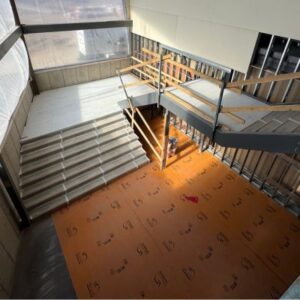
SkudoBoard, Stair Guard, and Commercial System protecting stairs, landings, and concrete flooring at a school building under construction.
Before work begins, establish designated pathways for material deliveries, waste removal, equipment movement, and contractor access. Protecting these routes first helps reduce wear and tear on finished surfaces throughout the project.
2. Match Protection to the Flooring Type
Different surfaces require different levels of protection. For example, hardwood floors are especially vulnerable to dents, scratches, and staining, and refinishing or replacing damaged sections can quickly add up. Polished concrete may require impact resistance from heavy equipment, machinery, and welding. Newly installed LVT must be protected against scratches, scuffs, and adhesive contamination.
Selecting the right product for each surface helps ensure finishes remain in like-new condition until project completion.
3. Don’t Forget Vertical Surfaces
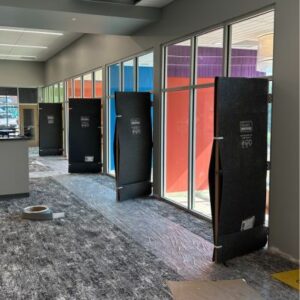
Skudo Door Defense protecting multiple doors at a library facility.
Summer renovations often involve moving large materials through occupied areas. In addition to flooring, don’t forget to protect vertical surfaces like walls, doors, framing, elevators, stairwells, millwork, and cabinetry. These surfaces are also subject to damage from moving carts and equipment as different trades move through.
4. Plan for Multi-Phase Renovations
Many campus projects occur simultaneously across multiple buildings. Creating a site-wide protection strategy can help standardize installation procedures, reduce replacement costs, improve contractor accountability, and keep projects on schedule.
5. Remove Protection at the Right Time
Protection should remain in place until major construction activities are complete. Removing protection too early can expose floors to final cleaning crews, furniture installation, technology installation, and other last-minute punch-list work. Waiting until the appropriate phase can prevent costly rework.
Final Thoughts
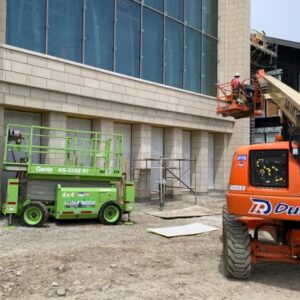
With compressed timelines and high expectations, summer school and university renovations leave little room for avoidable damage. A proactive surface protection plan helps contractors, facility managers, and project teams safeguard finished surfaces, control costs, and ensure facilities are ready when students return for the new academic year.
Ready to get started? Contact us today to chat with one of our surface protection experts to find the best solution for your upcoming project.